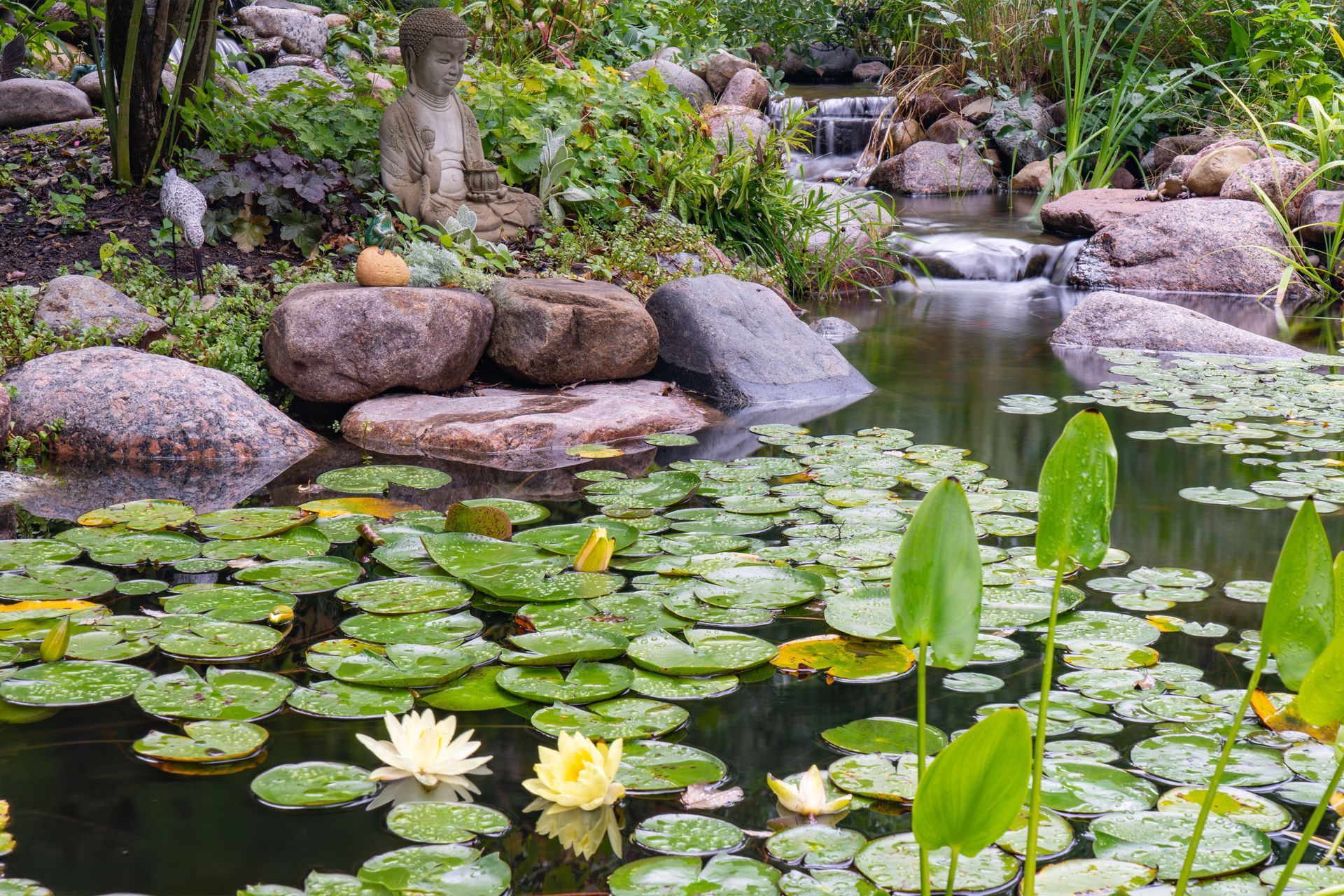
A Seasonal Guide to Living with Your Natural Eco Pond

Your living eco-system through the seasons
Let’s guide you through the journey of the seasons with your eco pond. Your pond is a living ecosystem that cycles naturally through periods of growth, activity, and rest throughout the year. By understanding how temperature and sunlight affect your water feature, you can perform small, consistent maintenance steps. This keeps your pond balanced and beautiful, ensuring enjoyment for you and health for all its inhabitants.
SPRING: WAKE UP YOUR POND
Spring marks the start of your pond's most active season. As the water warms, the ecosystem reawakens: fish stir, and plants begin their growth. This is the critical time to clear out any residue left from winter.
"A spring cleanout removes accumulated leaves and sludge, providing the beneficial bacteria a clean slate to begin their filtration work."
(Aquascape, 2025)
After the cleanout and refilling, remember to treat tap water with a pond detoxifier before putting fish back in. It is essential to restore the biological balance immediately. Introducing beneficial bacteria early helps support the natural nitrogen cycle, working to prevent algae problems before they ever get established.
SUMMER: MAINTAIN BALANCE IN WARM WEATHER
Summer is when your pond is at its peak activity, serving as the beautiful centrepiece of your outdoor area. Since warm weather can bring challenges like algae growth and fluctuating oxygen levels, regular maintenance is key.
"The robust growth of marginal and submerged plants provides the ultimate natural filtration, ensuring crystal-clear water for swimming."
(Aquascape, 2025)
The most important maintenance job is keeping the water circulating. Run your pump and filtration system continuously for maximum oxygenation and water movement. You should also monitor algae growth. You can manage this naturally by hand removal, trimming aquatic plants for better circulation, or adding floating plants for shade. When you feed fish responsibly, only give them what they can consume quickly, as overfeeding leads directly to waste that causes algae blooms.
FALL: PREPARE FOR WINTER'S REST
As temperatures cool, your pond's activity naturally slows down. Fall maintenance focuses on protecting the water from organic material. The best defence against nutrient overload is removing debris before it sinks, something the skimmer will do automatically but be prepared to empty the skimmer basket regularly during the autumn fall.
"Protecting the pond from falling leaves using netting is the single most important action a pond owner can take in the fall."
(Aquascape, 2025)
Cut back yellowed or dead foliage to stop it from decomposing in the water. Furthermore, you must transition your fish diet. Once water temperatures drop below 50 F stop feeding entirely. This prevents undigested food from decaying, which helps maintain water quality through the quiet winter months.
WINTER: APPRECIATE THE QUIET BEAUTY
During winter, your pond transforms into a unique, tranquil feature. Even though it is covered in ice and snow, the quiet stillness is an essential part of the pond's life cycle.
"Even under a blanket of snow, the pond retains its aesthetic appeal, offering a serene, structured beauty to the winter garden."
(Aquascape, 2025)
If you decide to keep your pond running, check your aerator or de-icer periodically. It is vital to ensure these devices are working properly and not obstructed by ice to allow for proper gas exchange. Trust in the natural process; the cycle of rest protects the ecosystem until spring returns (Aquascape, 2025).
References
Aquascape. (2025). The Ultimate Year-Round Pond Maintenance Guide. [Aquascape Booklet].
Recent Posts