
Top Aquatic Plants

February 2, 2026

Share this article

Plants are one of the most important parts of a pond ecosystem. They remove excess nutrients, offer protection for wildlife and help create a natural, balanced environment. Here is a guide to the main types of pond plants and some of the best species to consider.


About aquatic plants

Aquatic plants, also known as macrophytes, grow in or near water. They may float, emerge above the surface or grow fully submerged. They differ from algae because they evolved from land plants that adapted to life underwater.


Choosing the right plants

Plants add structure, colour, scent and shade. They oxygenate the water, support wildlife and help control algae. There are four main categories of pond plants, each with a specific role.


Submerged plants

Grow below the surface and act as natural oxygenators and filters.


Floating plants

Float freely or sit on the surface, keeping water cool and shaded to help prevent algae.


Marginal plants

Grow at the water’s edge and soften the boundary between land and water.


Moisture-loving and bog plants

Grow in wet or boggy soil and offer excellent cover for wildlife.


If you’re unsure which plants to choose, we’re always here to advise.


Plants

Willow Moss (Fontinalis antipyretica)
A moss-like oxygenator with dark green stems and spear-shaped leaves. Thrives in moving water up to 60cm deep and offers great cover for pond wildlife.


Milfoil (Myriophyllum spicatum)
A submerged plant with feathery green leaves and pinkish stems. Produces small summer flowers above the water. Not to be confused with the invasive Parrot’s Feather.


Water Lettuce (Pistia stratiotes)
A floating plant with velvety leaves and long trailing roots that act as an excellent fish nursery.


Frogbit (Hydrocharis morsus-ranae)
A free-floating plant with small lily-like leaves and delicate white flowers. Fast growing and helps combat duckweed.


Yellow Skunk Cabbage (Lysichiton americanus)
A bold marginal plant with large yellow flowers. Grows in shallow water or very moist soil and attracts pollinators.


Lobelia (Lobelia cardinalis)
A striking plant with red flowers that attract pollinators. It grows in shallow water or boggy areas and can reach over 4ft tall.


Brooklime (Veronica beccabunga)
A creeping marginal with fleshy leaves and small blue flowers. Provides excellent cover and spreads naturally.


Water Mint (Mentha aquatica)
A wildlife favourite with fragrant leaves and accessible flower heads. Adds a fresh scent to the pond edge.


Pickerel Weed (Pontederia cordata)
Produces clusters of baby blue flowers from late spring to autumn. Grows well in full sun in shallow water.


Iris (Iris spp.)
With hundreds of species, irises provide bright colour from spring onwards. Grow in water up to 30cm deep.


Water Lilies (Nymphaea spp.)
Hardy varieties are ideal for UK ponds. Provide shade, colour and protection for fish, as well as natural algae control.


Marsh Marigold (Caltha palustris)
A native plant with bright yellow flowers. Thrives in shallow water and attracts a wide range of pollinators
.

Recent Posts

February 2, 2026
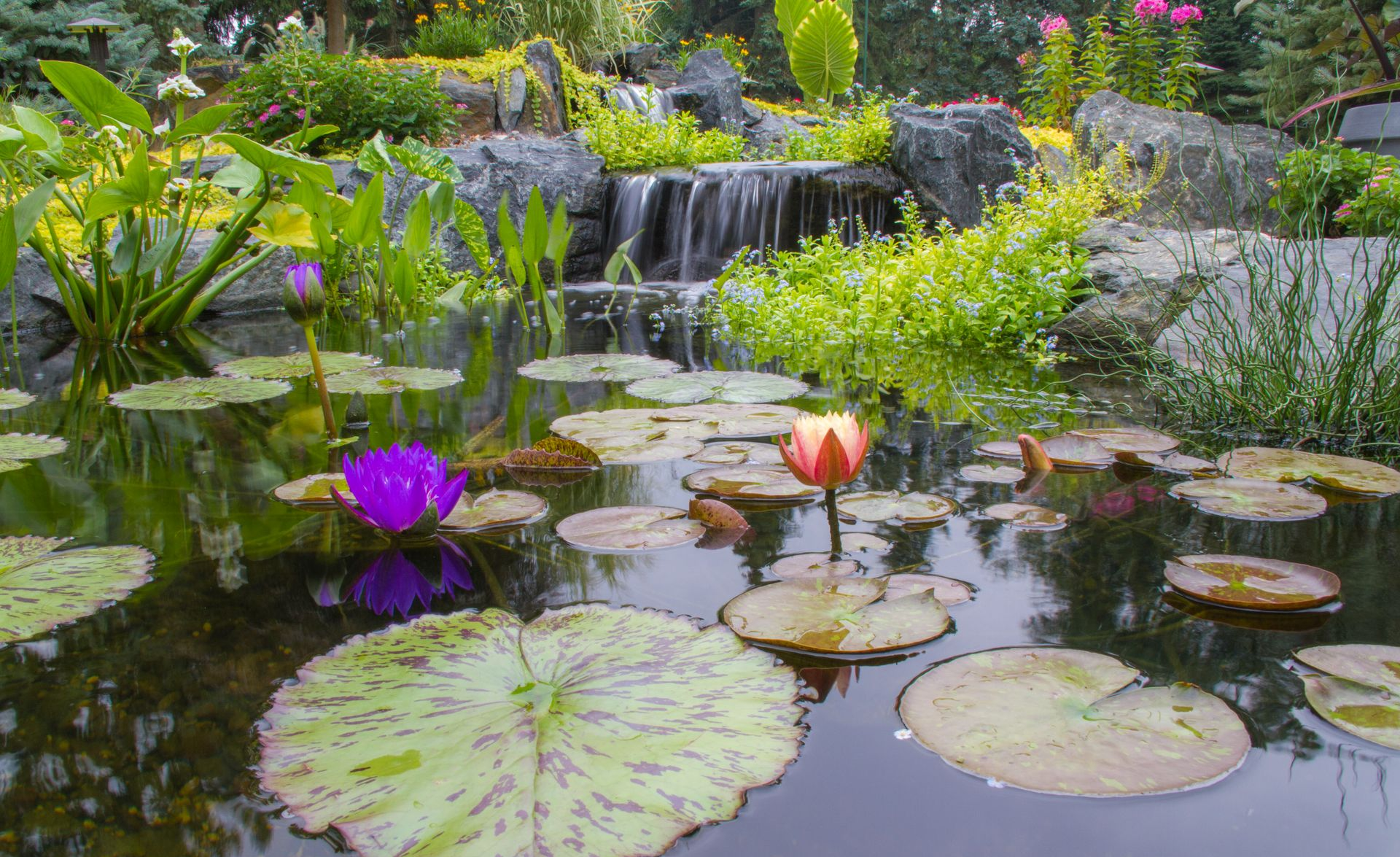
Your living eco-system through the seasons Let’s guide you through the journey of the seasons with your eco pond. Your pond is a living ecosystem that cycles naturally through periods of growth, activity, and rest throughout the year. By understanding how temperature and sunlight affect your water feature, you can perform small, consistent maintenance steps. This keeps your pond balanced and beautiful, ensuring enjoyment for you and health for all its inhabitants.
February 2, 2026
Looking after a pond doesn’t need to be complicated. With a little consistency and a few simple habits, you can keep your water clear, your plants thriving and your wildlife happy all year round. Here are the key things every pond owner should keep an eye on. 
February 2, 2026
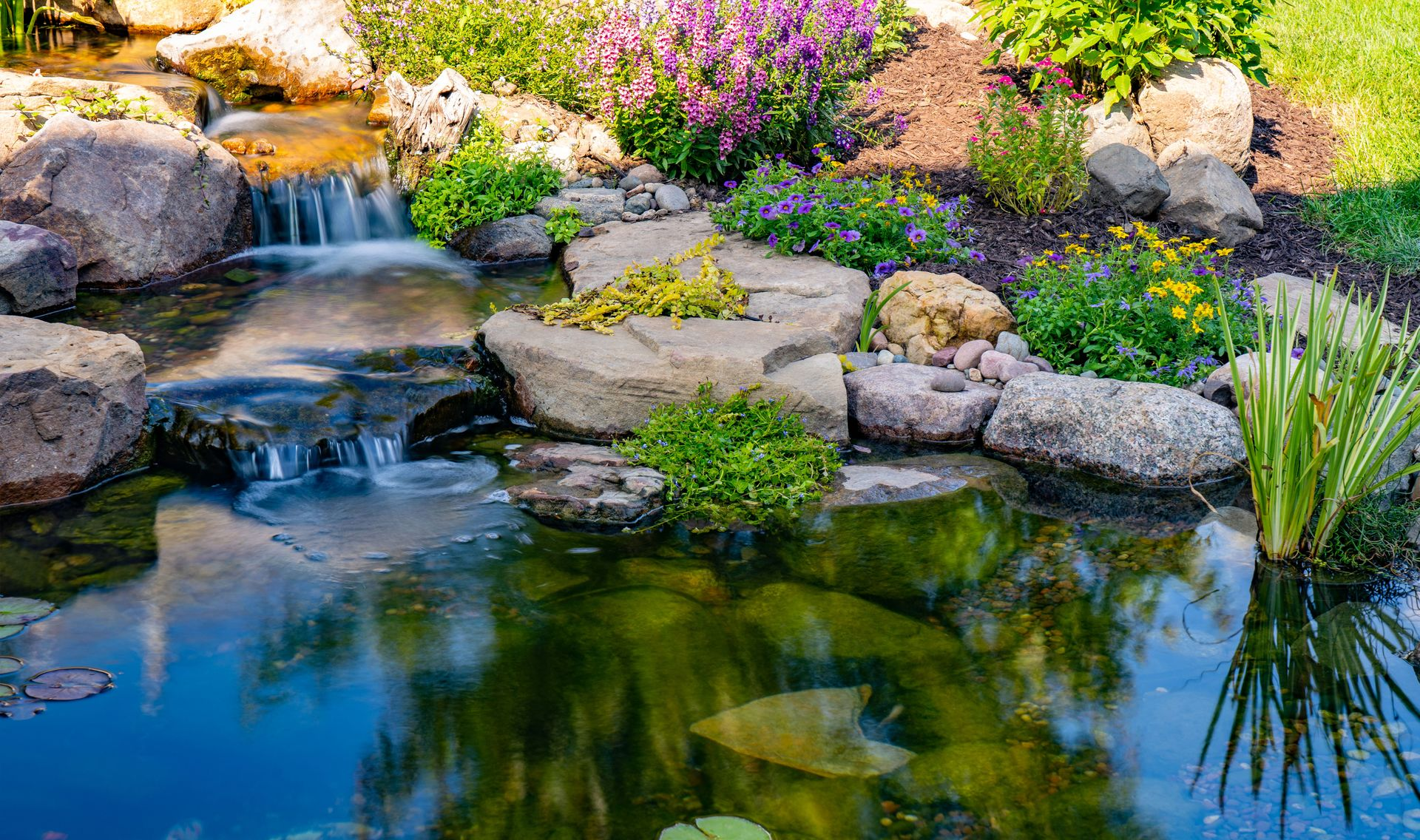
A leaking pond is concerning, but most leaks can be found and fixed with a clear, step-by-step approach. Use the checks below to identify where the water is escaping and what to do next.
February 2, 2026
From Celebrities to Family Gardens Across the UK Something interesting is happening across gardens in East Anglia and the UK. More homeowners are turning away from traditional chlorine pools and choosing natural swim ponds and eco-ponds. What started as a niche eco-friendly idea has become a mainstream design trend, and even celebrities are in on the act! Let’s find out more about this new craze.